
Watching reels is weakening the brains of children, is your child also a victim?
Short video platforms like Instagram Reels are affecting children's attention spans. Scientists say that watching short videos continuously alters the brain's reward system. This is why children are now finding it difficult to study or focus on a single task for long periods of time.
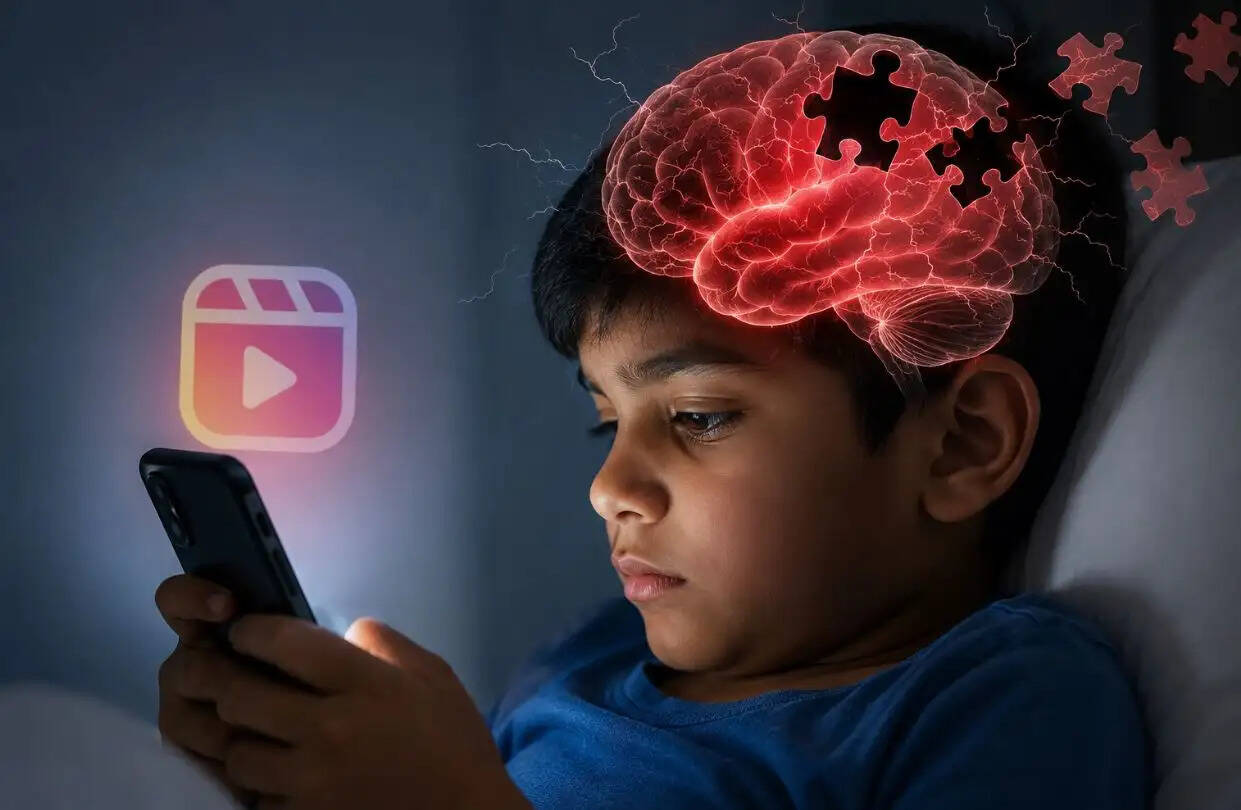
RJ Kesari News Desk: Does your child start scrolling through Reels as soon as they pick up their mobile phone? If so, it's not just for entertainment, but a habit that can have a profound impact on their brain.
Recent research by scientists and medical institutions around the world shows that Instagram Reels, TikTok, and other short video platforms are affecting children's ability to think, understand, and concentrate for long periods of time.
According to research, repeated viewing of short videos keeps the brain's reward system constantly active, preventing children from focusing on studies, books, or any single task for long periods.
Organizations and publications like Microsoft, Zhejiang University, the American Psychological Association, the Wall Street Journal, and Forbes have also expressed serious concern on this issue. The question arises: what changes are Reels causing in children's brains and how can this be prevented?
What is 'short attention span'?
Short attention span means not being able to concentrate on any one task, book, study or conversation for a long time.
According to Microsoft's famous research based on human behavior, in the year 2000, the average attention span of humans was around 12 seconds, which has reduced to around 8 seconds in the era of smartphones and short videos.
The research also said that this time is less than the average attention span of a goldfish which is 9 seconds. Experts say that by continuously watching 15 to 30 second videos, the brain gets accustomed to that fast pace. In such a situation, school classes, books or long conversations start appearing boring to children.
What goes through your mind when you watch Reels?
Scientists at Zhejiang University in China used neuroimaging technology to understand the impact of short videos on children's brains. MRI scans revealed that watching Reels and TikTok videos rapidly activates the ventral tegmental area (VTA), or the reward pathway.
This is the region responsible for feelings of pleasure and reward. The rapid release of dopamine due to the availability of a new video every few seconds causes children to scroll through the screen repeatedly. Scientists suggest that this process can gradually turn the habit into an addiction, weakening the ability to concentrate for long periods of time.
What is 'TikTok Brain'?
The Wall Street Journal has dubbed this entire transformation "TikTok Brain." You could also call it Reels Brain. According to the report, children's prefrontal cortex, which helps with decision-making, patience, and task completion, develops until around age 25.
If a child becomes addicted to short videos during this time, their focus and self-control may be affected. A Forbes report states that the algorithms of Instagram, TikTok, and YouTube Shorts quickly understand user preferences and consistently display similar content. This repeatedly boosts dopamine levels, keeping users engaged with the platform for longer.