
Landlord not returning your security deposit? Know your rights
If the landlord refuses to return the security deposit, tenants can take legal action. Evidence such as the rent agreement, bills, chats, and photos can be helpful. If necessary, you can file a legal notice, file a police complaint, or approach the court.
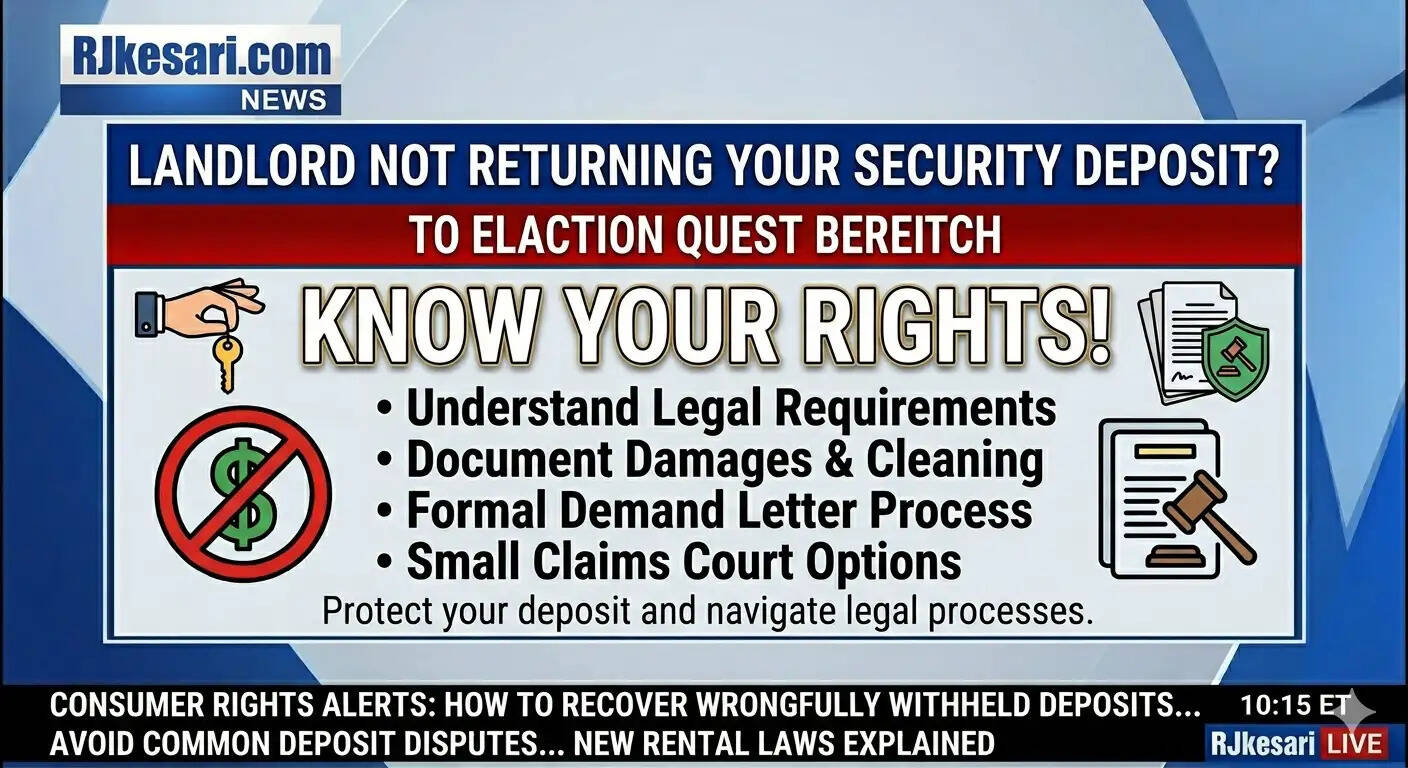
Many people often face a major problem after leaving their rented home. The landlord refuses to return the security deposit or deducts a significant portion of the amount without any valid reason.
In such cases, tenants often suffer losses due to a lack of knowledge of their rights.
Legal experts say that if the tenant has paid the rent on time, paid the electricity and water bills and left the house in a normal condition, then the landlord cannot arbitrarily withhold the security deposit.
What is security deposit?
A security deposit is a sum of money that a tenant pays to a landlord before moving into a home. It's intended to protect against future damage, rent arrears, or breach of contract. This amount is usually returned at the end of the tenancy.
However, landlords often make significant deductions for painting, cleaning, or minor wear and tear. Experts say that damage caused by normal use is not considered a loss.
In what cases can money be deducted?
A landlord can deduct money from the security deposit under certain circumstances, including outstanding rent, electricity or maintenance bills, serious damage to furniture or the home, and repair costs specified in the agreement.
However, arbitrary deductions without proof or written information are considered illegal. If a landlord deducts any amount, they must provide a clear explanation.
What should tenants do first?
If the deposit isn't returned, it's important to carefully review the rental agreement. It details the security deposit, refund deadlines, and deductions. Many agreements provide for the return of the deposit within 15 to 60 days.
In addition, tenants should preserve all relevant evidence, including rent receipts, bank transactions, electricity and water bills, WhatsApp chats, emails, and photos and videos taken when vacating the house.
There is also the option of legal action
If the matter is not resolved through negotiations, the tenant can request a refund of the deposit in writing. If necessary, a legal notice can also be sent through a lawyer.
Experts say that in many cases, disputes can be resolved with the help of the society or RWA. However, if the landlord is deliberately withholding money or making threats, a police complaint or the consumer forum and civil court can also be resorted to.
It is important to avoid these mistakes
Tenants should always sign a written rent agreement and avoid cash payments. Paying without a receipt can create problems later.
Also, photos and videos of the condition of the house should be kept when vacating. Experts say that with a little caution and proper documentation, tenants can easily get their security deposit back.