
A new era has begun: India's image will be transformed by the Rs 1 lakh crore RDI fund and the success of Skyroot Aerospace
The successful orbital launch by Skyroot Aerospace has already strengthened investor confidence in India's spacetech and deeptech sector, but funding has declined due to the lack of growth-stage companies.
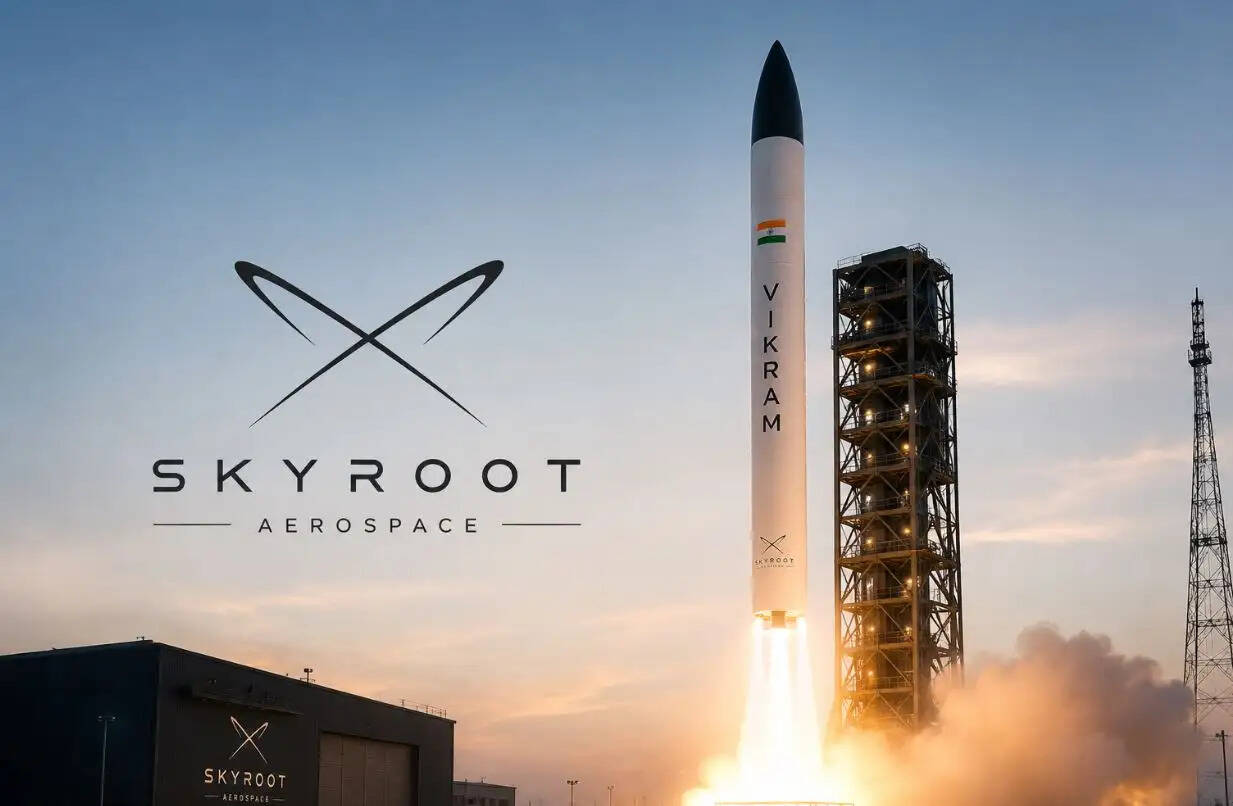
RJ Kesari News Desk: While funding values may have declined, investor sentiment towards India's deeptech ecosystem has never been stronger, with deal activity remaining stable and more companies entering the space sector. Investors told Moneycontrol that most of the hope is also pinned on the government's ₹1 lakh crore RDI fund.
A new era of space tech has begun
Last week was more than just an orbital launch for Skyroot Aerospace. The Hyderabad-based startup's successful first mission is expected to boost capital flows into India's nascent private spacetech ecosystem,
while also benefiting investors who have placed long-term bets on the sector. Skyroot, India's first spacetech unicorn valued at $1.15 billion, hopes to serve as a benchmark for investors to gauge how companies operate.
When Skyroot Aerospace recently successfully launched India's first privately built rocket into orbit, it marked another milestone for the deeptech ecosystem. Yet, while the company celebrated this success, its fundraising journey highlighted the challenges faced by many of India's largest technology startups.
Although Skyroot deliberately prioritized its launch campaign over fundraising, its latest financing round also took longer than expected as new investors were wary of backing a capital-intensive business with a long road to commercial returns.
As a result, the majority of the latest $60 million round ultimately came from existing investors. Spacetech startup Pixxel has adopted a similar approach, relying on internal backers for the majority of its fundraising while continuing discussions with a few major external investors, Moneycontrol reported.
What is the challenge?
Investors say these fundraising journeys reflect a larger reality of India's deeptech ecosystem. The challenge isn't a lack of capital or trust,
but rather a lack of growth-stage companies that have matured enough to raise significant external funds, forcing existing investors to shoulder a larger share of follow-on funding.
Venture Intelligence data shows that deeptech startups raised about $610 million in the first half (H1) of 2026,
down 25 percent from about $810 million last year and down about 72 percent year-on-year (YoY) from the $2.18 billion raised in H2 2025, but investors say this decline reflects a lack of large growth-stage rounds for now, rather than weak confidence in the sector.
Chetan Mehta, founding partner at early-stage deeptech investor Aum Ventures, said, "What we're seeing right now is more early-stage funding.
Some major big-ticket rounds may not have materialized, and that's why we're seeing this decline. The funding picture may also improve in the coming months, as several large rounds are nearing completion."
Electric vehicle makers Ather Energy and River are in advanced stages of raising approximately $260 million and $85 million, respectively, as first reported by Moneycontrol. Meanwhile,
spacetech startups Pixxel and Agnikul Cosmos are also in the market to raise $80-100 million and $50-75 million, respectively. Overall, these transactions are expected to increase total funding levels and present a stronger picture than a year ago.