
The government will earn 35,000 crore rupees from already built roads, and this plan has been made for highways
The government has developed a mega plan to raise ₹35,000 crore to build a network of new roads across the country. Under this plan, 28 major national highways across the country, including those in Haryana and Uttar Pradesh, will be leased to private companies in the next financial year. The government will use this revenue from existing roads to fund new infrastructure projects.
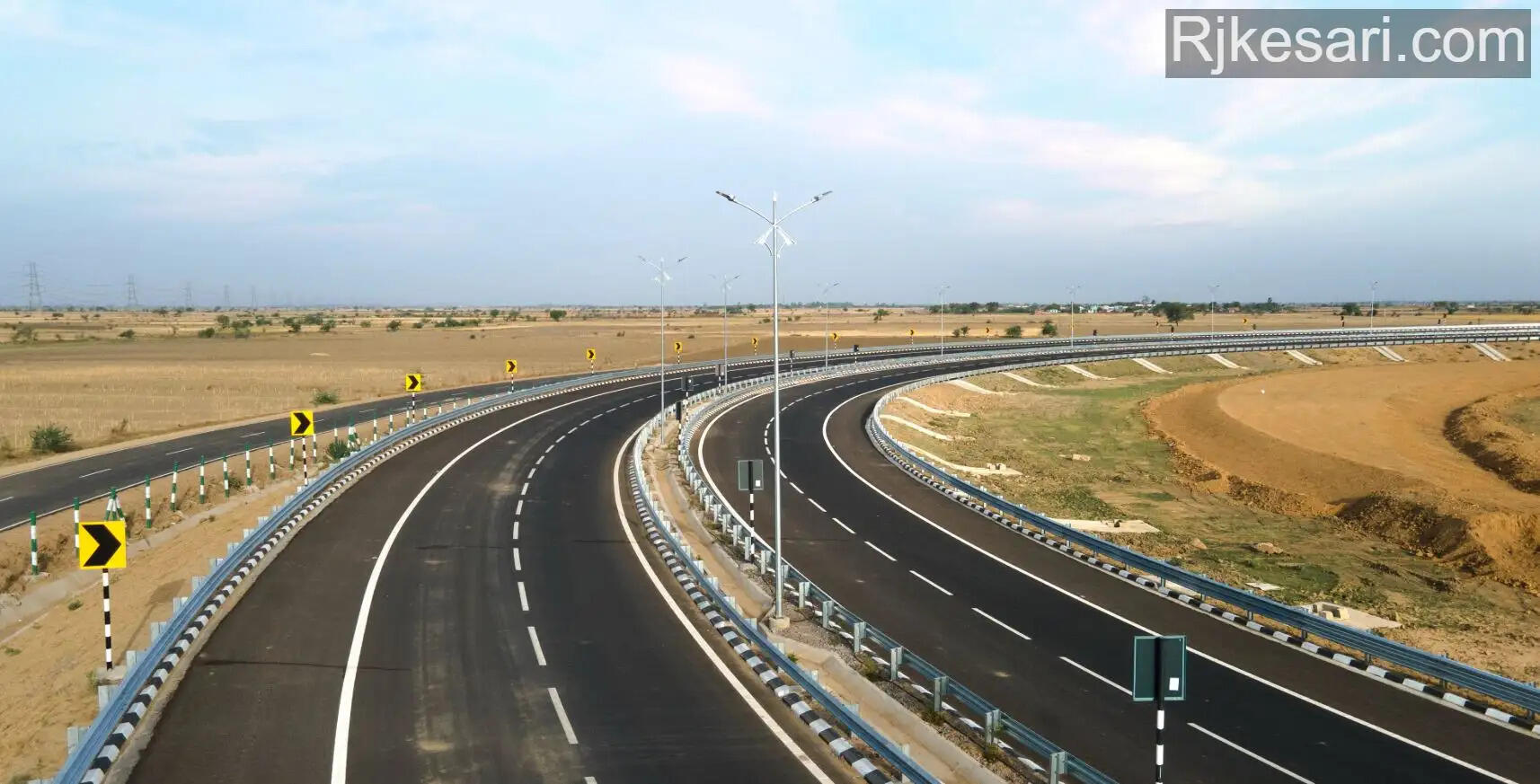
The government is making a major move to accelerate the rapid expansion of the country's road network. To ensure a capital shortage for infrastructure development, the government is planning to raise approximately ₹35,000 crore from 28 major national highway assets in fiscal year 2026-27 (FY27).
This is no ordinary decision, but part of a robust strategy to generate a substantial fund for national development by leasing government assets, a strategy known as "asset monetization" in market parlance.
What is this new blueprint of Rs 35,000 crore?
The National Highways Authority of India (NHAI) has prepared a complete blueprint for this mega plan. Capital will be raised by privatizing these 28 highway stretches, approximately 1,800 kilometers long.
The government will hand over the operation of its existing roads to private companies or investors for a fixed period. In return, the government will receive a large lump sum, which will be used to build new roads.
This monetization will be accomplished through a Public-Private Infrastructure Investment Trust (InvIT) or Toll-Operate-Transfer (TOT) model. Seven EPC (Engineering Procurement and Construction) projects are included in this entire process.
Haryana-UP highways will become the biggest source of income
In this new NHAI list, the largest number of properties have been selected from the state of Haryana, followed closely by Uttar Pradesh. The major highways in these states are considered highly profitable for investors.
To reduce investment risk, assets with hybrid annuity models (HAM) are being prioritized. This will increase the confidence of foreign and domestic institutional investors.
Interestingly, the government recently allowed sovereign wealth funds and pension funds to invest directly in new toll-road projects (greenfield). This move will play a key role in attracting significant investment to the highway sector.
NMP 2.0 will change the picture of the country's infrastructure
In February this year, the government announced the National Monetization Pipeline (NMP 2.0), a vision with a grand vision. The ambitious target is to raise ₹4.42 lakh crore from the road sector alone over five years, from fiscal year 2026 to 2030.
Monetization is expected to generate ₹68,770 crore in fiscal year 2027 alone. In the previous financial year (2025-26), the Ministry of Road Transport deposited ₹29,000 crore into the government treasury through this process.
Of this, ₹9,000 crore came from five roads spanning 260 kilometers in four states through public InvITs.
A major change from the first phase of the NMP is that Build-Operate-Transfer (BOT) projects being proposed in the current financial year will also be included in the monetization pipeline.
What impact will this have on the lives of ordinary citizens?
From a common citizen's perspective, this entire exercise has many implications. When the government diverts funds from old roads and invests them in new projects, connectivity improves across the country.