
Strait of Hormuz Closed: Iran Imposes Fresh Maritime Blockade; Will Petrol and Diesel Prices Skyrocket Globally?
Geopolitical tensions in the Middle East have escalated dramatically following an official announcement by Iran’s Islamic Revolutionary Guard Corps (IRGC) Navy declaring the closure of the Strait of Hormuz "until further notice."
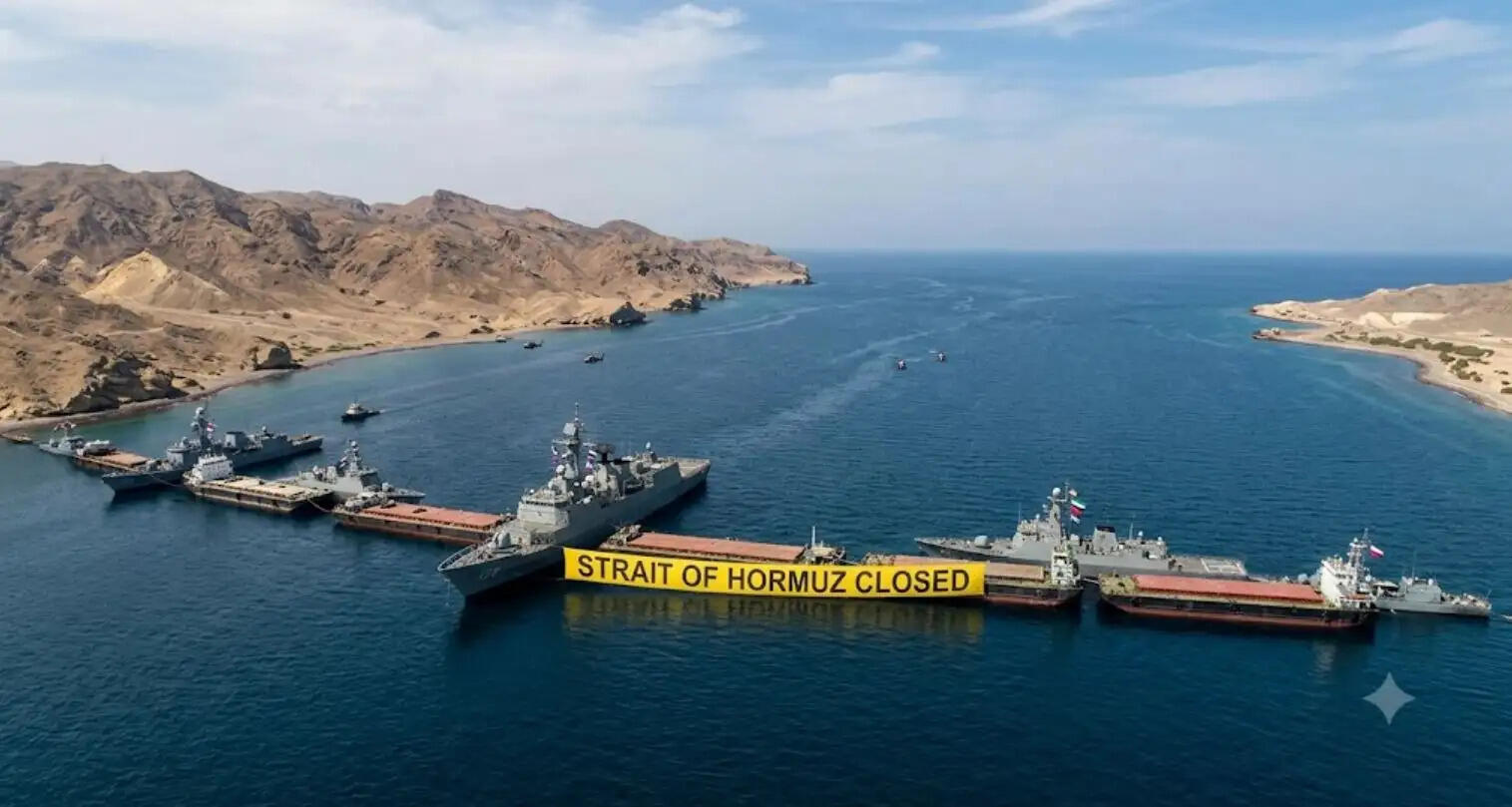
RJ Kesari News Desk: The abrupt blockade of one of the world's most critical maritime choke points has triggered immediate bullish concerns across global energy sectors. If the passage remains obstructed for an extended period, an imminent spike in global crude oil prices could heavily impact retail fuel costs worldwide.
🚢 The Catalyst: Unauthorized Routes and Disabled Tracking
According to state-media statements released by Tehran, the Iranian military intercepted a commercial vessel—identified by US Central Command as a Cyprus-flagged container ship—after it reportedly veered into an "unapproved route" and disabled its automatic maritime tracking systems.
-
The Fraying Ceasefire: Iran claims the ship ignored multiple warnings before being struck and halted.
-
U.S. Retaliation: In immediate response to the assault on civilian mariners, US Central Command (CENTCOM) launched a third round of targeted military strikes against IRGC installations to degrade their capabilities.
-
Tehran's Ultimatum: The IRGC Navy noted that the strait will remain completely sealed until the United States halts its "regional interventions." Iran further warned that any western military retaliation will face a severe response, threatening that regional foreign military bases could become direct targets.
🌐 Why the Strait of Hormuz Controls Global Inflation
The Strait of Hormuz is universally recognized as the single most vital transit artery for the global energy market.
Supply Statistics: Historically, approximately 20% of the world's total crude oil and liquefied natural gas (LNG) consumption transits right through this narrow waterway daily.
An extended blockade creates severe supply chain bottlenecks, directly impacting economies in several ways:
-
Surging Commodity Costs: Energy analysts warn that restricted flows will immediately inflate the per-barrel price of crude oil.
-
The Domestic Ripple Effect: Higher crude costs translate directly to more expensive petrol, diesel, and compressed gas at domestic pumps.
-
Collateral Inflation: Beyond retail fuel, the price hike is expected to drive up air travel fares, maritime freight charges, logistics operations, and the manufacturing costs of everyday consumer goods, threatening a renewed wave of global inflation.
🇺🇸 What the United States and Mediators Demand
The geopolitical standoff has locked Washington and Tehran in a high-stakes diplomatic bottleneck.
| Negotiating Party | Core Position & Demands |
| United States | Demands a public guarantee from Iran ensuring completely unrestricted, toll-free navigation for all commercial vessels through international lanes. |
| Iran (Tehran) | Demands an absolute end to U.S. military presence in the Gulf and insists on its right to regulate, approve, and potentially tax vessels navigating its territorial waters. |
| Oman & Qatar | Actively facilitating emergency backdoor diplomatic channels in Muscat and Tehran to broker a technical compromise and save a collapsing interim peace deal. |