
Lost Your Property Papers? Here's How to Recover Duplicate Documents Without Stress
Property Papers Lost: Losing the original documents of your property can be stressful, but it does not mean you lose ownership of your property.
RJ Kesari News Desk: Legal experts say that if your original sale deed or other property papers are misplaced, you should act quickly to obtain certified copies. Doing so can help you avoid complications when selling the property, applying for a home loan, or handling future legal matters.
The good news is that there is a well-defined legal process for recovering property documents through the concerned authorities.
Does Losing Property Papers Affect Ownership?
No. Losing the original property documents does not automatically cancel your ownership rights.
Your ownership is established through official land records and property registration maintained by the government. However, original documents are often required for property transactions, bank loans, and legal verification. Therefore, obtaining duplicate or certified copies as soon as possible is highly recommended.
What Should You Do First If Property Documents Are Lost?
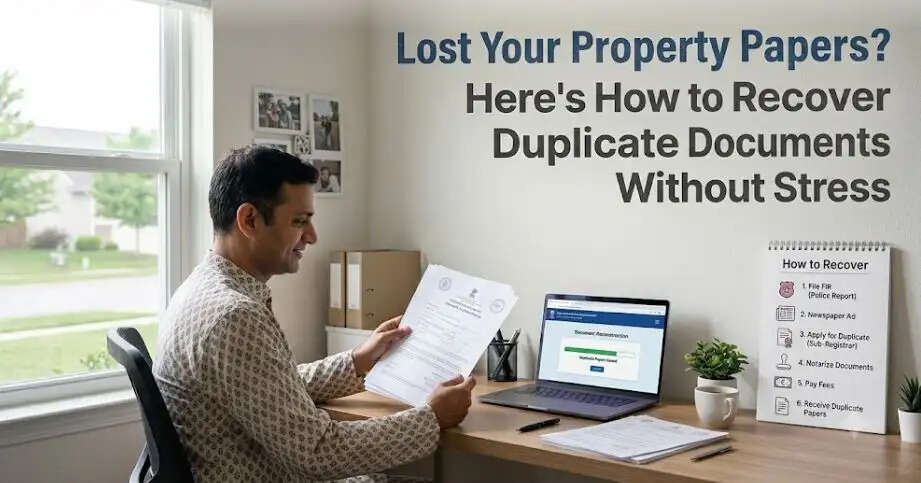
Legal experts recommend following these steps immediately:
1. File an FIR or Police Complaint
Visit the nearest police station and report the loss of your property documents. A police complaint or FIR creates an official record confirming that the documents have been misplaced.
2. Publish a Public Notice
Many legal professionals advise publishing a notice in a newspaper mentioning the loss of the documents. This helps reduce the risk of misuse and informs the public that the documents are no longer in your possession.
3. Prepare an Affidavit
Prepare an affidavit stating that the original documents have been lost despite reasonable efforts to locate them. Depending on local requirements, the affidavit may also need to be notarised.
4. Apply for a Certified Copy
Visit the Sub-Registrar Office where the property was originally registered and apply for a certified copy of the required documents.
You may be asked to submit:
- Identity proof
- Address proof
- Property registration details
- Copy of the FIR or police complaint
- Affidavit
- Newspaper publication (if applicable)
- Any other supporting documents requested by the authorities
After verification, the Sub-Registrar's office can issue certified copies of the registered documents.
Which Property Documents Are Most Important?
Several documents are essential during property transactions.
These commonly include:
- Sale Deed
- Title Deed
- Encumbrance Certificate
- Property tax receipts
- Occupancy Certificate
- Stamp duty and registration receipts
- Power of Attorney (where applicable)
- No Objection Certificate (NOC)
- Khata Certificate
- Housing society share certificate (if applicable)
- Aadhaar, PAN, and identity documents of both buyer and seller
Keeping these documents safely stored is important for future transactions.
Why Is the Sale Deed So Important?
The Sale Deed is one of the most important legal documents relating to property ownership.
It serves as proof of ownership and is generally required for:
- Buying or selling property
- Transfer of ownership
- Applying for a home loan
- Mortgaging property
- Resolving legal disputes involving ownership
Are Certified Copies Legally Valid?
Yes. Certified copies issued by the Sub-Registrar Office are legally recognised documents.
However, if a property dispute arises, the court may examine supporting evidence such as:
- Certified copies issued by the registration authority
- Affidavit regarding the loss of original documents
- Notarised declarations
- Witness statements, where required
These documents can help establish the authenticity of ownership records.
Can You Get a Home Loan with Duplicate Property Documents?
In many cases, banks may consider certified copies while processing a home loan application. However, approval depends on the bank's internal policies and legal verification process.
The lender may also ask for additional documents such as an Encumbrance Certificate and other ownership records before taking a final decision.
What If the Bank Loses Your Original Documents?
If your original property papers are lost while they are in the custody of a bank, the procedure for obtaining certified copies remains largely the same.
However, if the loss occurred due to the bank's negligence, you may request the bank to bear the expenses involved in obtaining duplicate documents, subject to applicable banking rules and the specific circumstances of the case.
Tips to Protect Your Property Documents
- Store original documents in a secure location such as a bank locker.
- Keep multiple photocopies for reference.
- Scan and securely save digital copies.
- Regularly verify that all property records are complete and up to date.
- Avoid handing over original documents unless absolutely necessary.