
Haryana BPL Families to Get ₹50,000 Subsidy with Free Solar Power: Know Eligibility, Benefits & How to Apply
Haryana government is offering a ₹50,000 subsidy to eligible BPL families for rooftop solar systems. Know eligibility, benefits, application process, and how to reduce electricity bills.
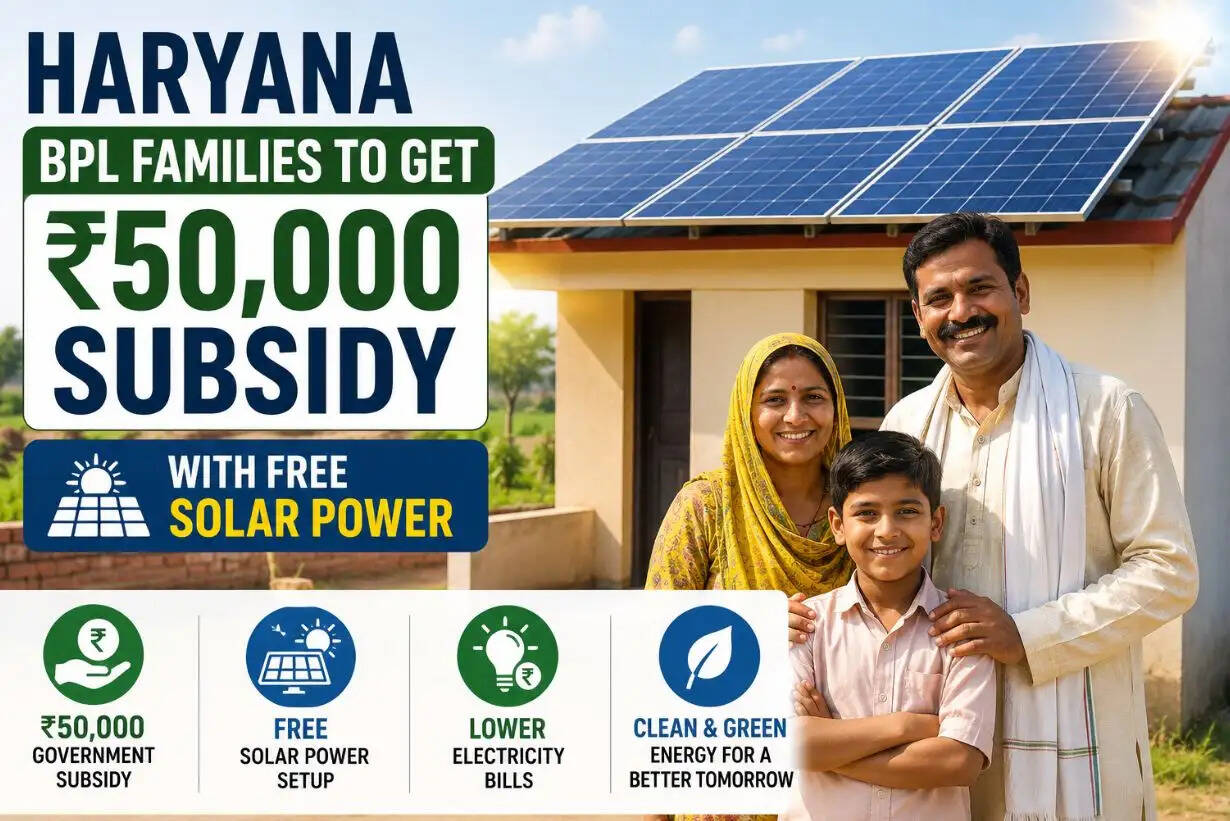
RJ Kesari News Desk: Haryana is accelerating its transition toward clean and renewable energy by encouraging households to install rooftop solar systems. Under a special campaign launched by the state's electricity distribution companies, eligible Below Poverty Line (BPL) families can receive a ₹50,000 government subsidy, helping them significantly reduce installation costs while enjoying substantial savings on electricity bills.
The initiative is being implemented by Dakshin Haryana Bijli Vitran Nigam (DHBVN) and Uttar Haryana Bijli Vitran Nigam (UHBVN) to promote energy independence and sustainable power generation across the state.
Statewide Campaign to Promote Rooftop Solar Systems
Following the directions of Managing Director Vikram Singh, DHBVN and UHBVN have intensified awareness campaigns across Haryana to encourage consumers to adopt rooftop solar technology.
The objective is to increase the use of renewable energy, lower dependence on conventional electricity, and reduce household power expenses through government-supported solar installations.
Palwal Families Set an Example by Installing Solar Plants
As part of the campaign, two residents of Machhipura Hasanpur village in Palwal district—Praveen Kumar and Shrichand—have installed 2-kilowatt rooftop solar plants on their homes.
Their decision showcases how rural households can generate their own electricity while contributing to a cleaner environment.
₹50,000 Subsidy for Eligible BPL Families
One of the biggest attractions of the scheme is the financial assistance provided by the Haryana government.
Both beneficiaries received a ₹50,000 subsidy for installing their rooftop solar systems, substantially reducing the overall installation cost. With the solar panels now operational, the families can generate a significant portion of their household electricity, resulting in major savings on monthly power bills.
For many households, the electricity generated through rooftop solar can meet most daily requirements, dramatically reducing dependence on grid power.
More Than Just Lower Electricity Bills
Apart from financial savings, the Haryana Rooftop Solar Scheme offers several long-term benefits:
- Lower monthly electricity bills
- Government subsidy reduces installation cost
- Cleaner and renewable source of energy
- Reduced carbon emissions
- Greater energy independence for households
- Long-term savings through self-generated electricity
These advantages make rooftop solar an attractive investment for eligible families.
Officials Urge More Families to Join the Scheme
According to Palwal Circle Superintending Engineer Ranjan Rao, the scheme not only provides direct financial benefits to consumers but also plays a significant role in environmental protection by reducing carbon emissions.
He encouraged more residents to take advantage of the government support and adopt green energy solutions for their homes.
Boosting Energy Self-Reliance in Rural Haryana
Officials believe that wider adoption of rooftop solar systems in villages will strengthen energy self-sufficiency across rural Haryana. Successful installations are expected to inspire more households to switch to renewable energy while helping the state achieve its clean energy goals.
The government's long-term vision is to expand rooftop solar adoption across both urban and rural areas, making electricity more affordable and environmentally sustainable.
Who Can Benefit?
The scheme is particularly beneficial for:
- BPL (Below Poverty Line) households
- Homeowners planning to install rooftop solar systems
- Families looking to reduce electricity expenses
- Consumers interested in renewable energy solutions
Eligible applicants should check the latest guidelines issued by their local electricity distribution company before applying.