
Got a Rs 2,000 Note Lying in Your Locker? Don't Panic, Here Is How and Where to Exchange It via RBI
How to Exchange Rs 2000 Notes in Bank: Are you still holding onto those pink Rs 2,000 currency notes in your wallet or home safe, wondering if they have turned into useless pieces of paper? If so, here is a major piece of comforting news for you.
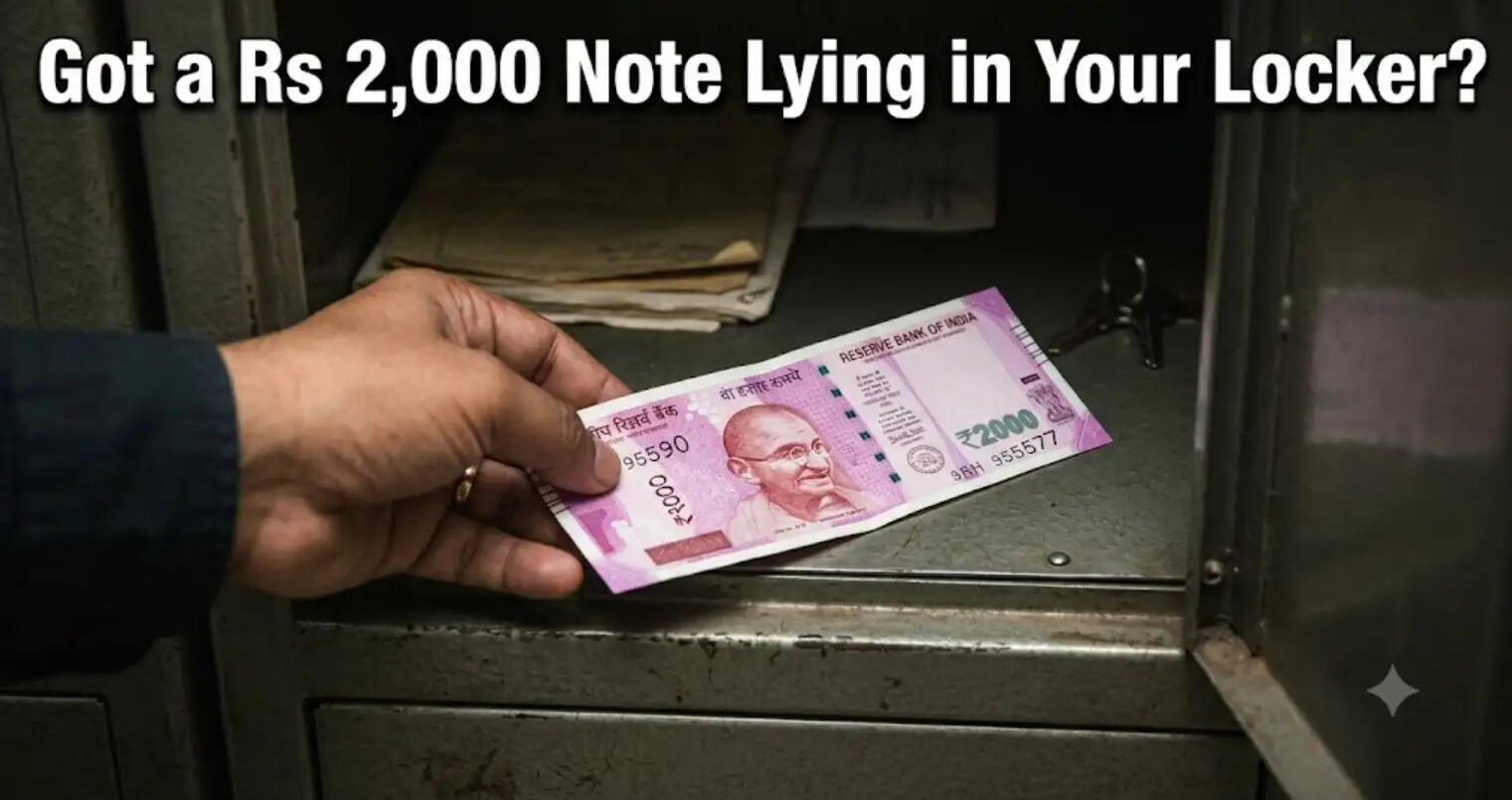
The Reserve Bank of India (RBI) has explicitly clarified that the Rs 2,000 note remains a legal tender. Even though it has been completely withdrawn from everyday market circulation, its legal validity stands intact. This means you can still safely exchange these notes or deposit them directly into your bank account by following a specific, official procedure.
The Journey from the 2016 Demonetization to Now
Back in 2016, the Indian government shook up the financial ecosystem by demonetizing the old Rs 500 and Rs 1,000 currency notes. To quickly inject liquidity back into the market, the central bank introduced the high-value Rs 2,000 note. Years later, under its Clean Note Policy, the RBI decided to systematically pull these notes back from public circulation. While the initial window for 2000 note exchange at regular commercial bank branches closed on October 7, 2023, the central bank created alternative avenues so citizens wouldn't lose their hard-earned money.
Is the Rs 2,000 Note Still Valid Today?
Yes, the note is 2000 rupee note valid or not question can be answered with a reassuring yes—it is 100% legal tender. However, you cannot use it to buy groceries at a local store, nor can you walk up to a regular neighborhood bank or local post office counter to swap it for smaller change. To extract its value, you must use the specific channels authorized by the RBI.
Where Can You Exchange Your Rs 2,000 Notes?
If you have these notes on hand, you can initiate a 2000 note exchange by personally visiting any of the 19 RBI Issue Offices spread across major cities in the country. Here are the core guidelines to keep in mind:
-
Transaction Limit: You can exchange a maximum value of Rs 20,000 (ten notes of Rs 2,000) at a time per day for cash over the counter.
-
Documentation Needed: You will need to provide valid officially valid documents (OVDs) such as your Aadhaar card, PAN card, or voter ID for verification.
-
Direct Account Deposits: If you choose to deposit the amount directly into your bank account rather than taking cash, there is no upper limit on the total value, provided your bank account is fully compliant with KYC norms.
The 19 Authorized RBI Issue Offices Across India
The designated locations where you can walk in to submit your notes are the RBI regional offices located in Ahmedabad, Belapur, Bengaluru, Bhopal, Bhubaneswar, Chandigarh, Chennai, Guwahati, Hyderabad, Jaipur, Jammu, Kanpur, Kolkata, Lucknow, Mumbai, Nagpur, New Delhi, Patna, and Thiruvananthapuram.
Can't Visit an RBI Office? Use India Post to Do It from Home
If you live far away from these major cities or cannot travel to an RBI office personally, you don't need to stress. The central bank has partnered with the postal network to make this easy. You can safely mail your currency notes using exchange 2000 note post office services via insured/registered post. Here is the step-by-step process:
-
Write a formal covering letter requesting the exchange/deposit.
-
Clearly mention your active bank account number, bank name, and IFSC code.
-
Attach a clear photocopy of your valid ID proof (like an Aadhaar or PAN card).
-
Securely pack your Rs 2,000 notes along with these documents inside a sturdy envelope.
-
Send the package via Registered or Insured Post to any of the official rbi issue offices list addresses.
-
Once the RBI receives and verifies the authenticity of your notes, the equivalent amount will be digitally credited straight to your bank account.
What Percentage of Currency Has Reclaimed the Banks?
According to data compiled by the central bank, approximately 98.47% of the total Rs 2,000 notes that were actively circulating in the market have already successfully made their way back into the banking system. Only a tiny fraction remains scattered among the public.
Income Tax Rules and PAN Card Requirements
While managing your cash deposits, it is vital to keep tax compliances in mind. According to the standing rules of the Income Tax Department, providing your PAN card is absolutely mandatory if your total cash deposits across accounts cross Rs 10 lakh threshold during a single financial year.