
Do Solar Panels Lose Efficiency in Extreme Heat? Here's How Rising Temperatures Affect Power Generation
Solar Panel: As temperatures continue to soar across many parts of India, with several states recording over 40°C, many homeowners are wondering whether hotter weather helps solar panels generate more electricity. It's a common misconception that more heat means more power—but the reality is quite different.
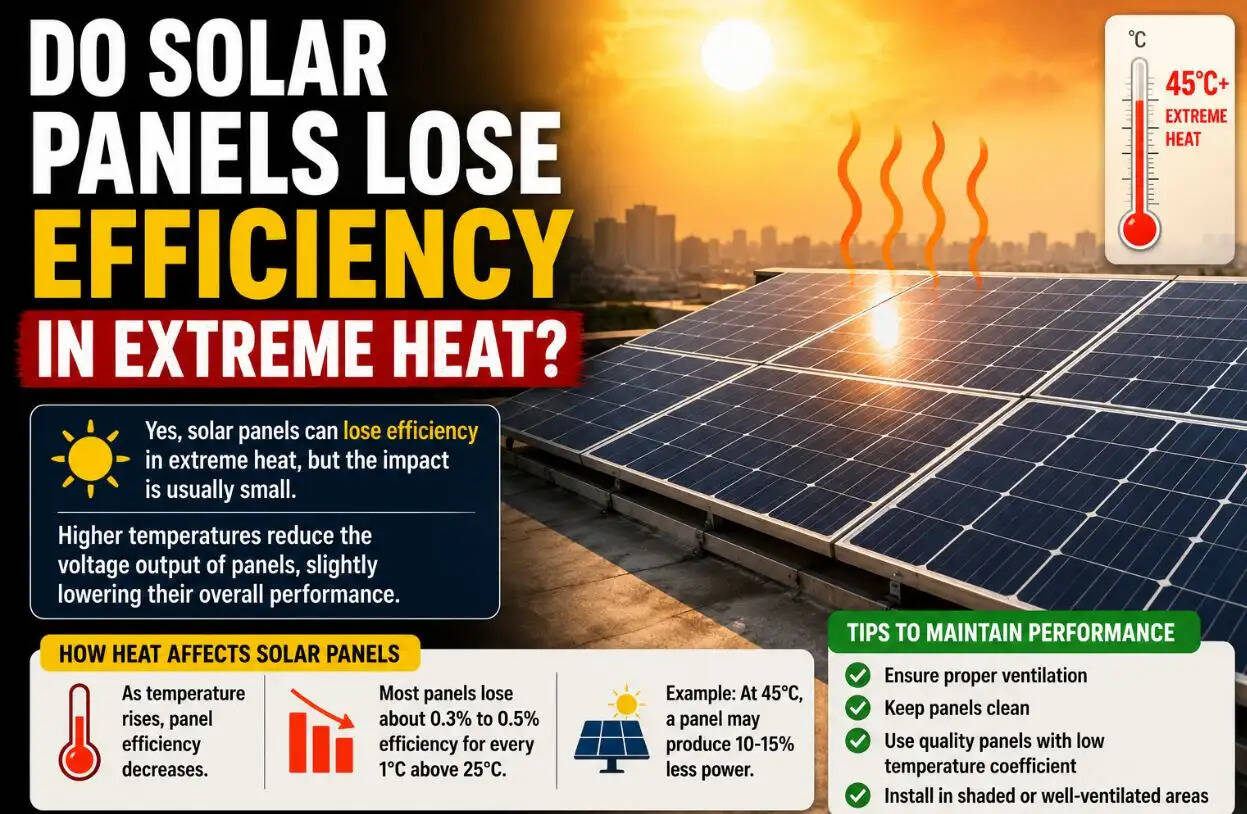
RJ Kesari News Desk: According to solar energy experts, solar panels generate electricity from sunlight, not heat. While bright sunshine is essential for power generation, extremely high temperatures can actually reduce a solar panel's efficiency.
Do Solar Panels Work Better in Hot Weather?
The simple answer is No.
Solar photovoltaic (PV) panels convert sunlight into electricity. Although sunny days are ideal for solar power generation, rising temperatures increase the operating temperature of the panels, which can reduce their overall performance.
This is why many solar systems may produce slightly less electricity during extremely hot afternoons, despite receiving intense sunlight.
Why Does High Temperature Reduce Solar Panel Efficiency?
Solar panels are designed to perform best under standard testing conditions, usually around 25°C.
As the panel temperature rises beyond this level:
- Electrical resistance inside the solar cells increases.
- Voltage output decreases.
- Overall energy conversion efficiency drops.
In many cases, every 1°C increase above 25°C can reduce a solar panel's efficiency by approximately 0.3% to 0.5%, depending on the panel technology and manufacturer.
How Indian Summers Affect Solar Panels
During Indian summers, it's not just the air temperature that rises.
Concrete rooftops absorb and radiate heat, making the panels even hotter than the surrounding air. In many regions, panel temperatures can exceed 60°C, especially during peak afternoon hours.
Another challenge is dust accumulation, which blocks sunlight from reaching the solar cells and further reduces electricity generation if panels are not cleaned regularly.
Can Extreme Heat Damage Solar Panels?
Modern solar panels are built to withstand harsh weather conditions, including high temperatures.
However, prolonged exposure to excessive heat combined with poor maintenance can gradually affect performance over time. This makes high-quality panels, proper installation, and regular servicing essential for maintaining long-term efficiency.
How to Reduce the Impact of Heat on Solar Panels
Experts recommend following these best practices to minimize heat-related efficiency losses:
- Maintain adequate air gaps beneath the panels for better airflow.
- Install panels at the correct tilt angle.
- Ensure proper ventilation around the system.
- Use premium-quality, heat-resistant solar panels and components.
- Install wiring and mounting structures according to industry standards.
These measures help keep panel temperatures lower and improve overall system performance.
Summer Maintenance Tips for Better Solar Performance
To maximize electricity generation during the summer:
- Clean solar panels regularly to remove dust and dirt.
- Inspect the system periodically for loose wiring or technical issues.
- Avoid shading from nearby trees or structures.
- Monitor daily power generation through your inverter or solar monitoring app.
- Schedule professional maintenance if you notice a significant drop in output.