
Decoding E-20 Petrol: How Much Will Your Vehicle's Mileage Drop and Expenses Rise?
The nationwide rollout of E-20 petrol (a blend of 20% ethanol and 80% conventional petrol) has sparked an intense debate across India's mileage-conscious automotive market. For a regular commuter driving 50 kilometers daily, tracking every drop of fuel is standard practice.
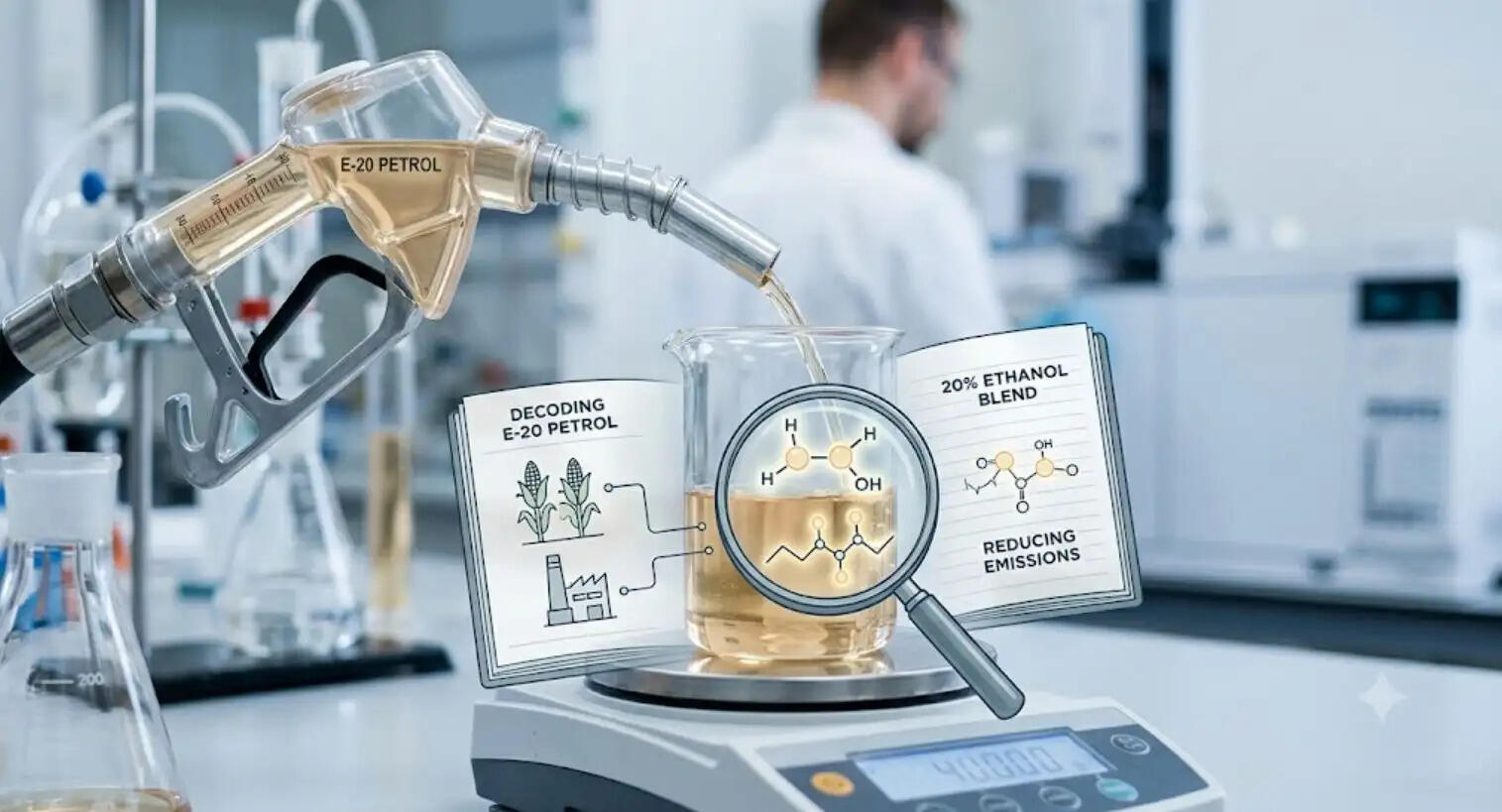
RJ Kesari News Desk: The biggest question on everyone's mind is simple: How will this change affect my monthly household budget and vehicle health? Let's break down the entire matter in three clear, expert-backed insights.
1. The Math: Monthly Fuel Consumption and Pocket Impact
Ethanol has a lower energy density than pure petrol, meaning it packs less explosive energy per liter. Consequently, engines must burn slightly more fuel to cover the same distance.
Official Government Data: The Ministry of Petroleum and Natural Gas and the Automotive Research Association of India (ARAI) confirm that running E-20 fuel in an E-20 compliant vehicle leads to a 3% to 5% drop in fuel economy.
Let's look at how this directly alters your monthly expenses based on regular city commuting:
| Running Parameter | Old Petrol Basis | New E-20 Petrol Basis |
| Daily Commute | 50 km | 50 km |
| Vehicle Mileage | 15.0 km / liter | 14.2 km / liter (~5% drop) |
| Monthly Fuel Needed | ~99 Liters | 102 Liters (An extra 3 liters) |
| Fuel Price (Delhi) | ₹102.12 / liter | ₹102.12 / liter |
| Total Monthly Cost | ₹10,110 | ₹10,416 |
The Financial Takeaway: Your monthly wallet hit is an increase of roughly ₹300 per month. While auto experts point out that this is a minor expense for the middle class (amounting to less than a couple of ice creams), it can add up for tight, fixed budgets.
2. The Maintenance Factor: New vs. Older Vehicles
How your vehicle reacts to E-20 depends heavily on the year it was manufactured.
-
E-20 Compliant (Newer Vehicles): Material components, fuel lines, and engines are chemically treated to handle the corrosive nature of ethanol. These vehicles suffer the minor mileage drop mentioned above but face zero extra wear and tear.
-
Older Legacy Vehicles: Vehicles designed for pure petrol or E-10 are highly vulnerable. Because ethanol absorbs water and can corrode rubber seals, plastics, and metallic components in fuel systems, older vehicles are expected to experience higher maintenance costs and quicker component degradation over time.
3. The Unintended Trap: Putting E-20 into E-10 Engines
The performance drop worsens significantly if you use mismatched fuel infrastructure. According to the World Auto Forum, data indicates that if you run a higher ethanol blend like E-20 in an older vehicle built strictly for E-10 compliant fuel, the fuel efficiency penalty doesn't just stay at 5%—the mileage can plummet by 8% to 10%.
🌍 The Bigger Picture: Price Stability vs. Cheap Fuel
While the drop in mileage feels like a negative, the Indian government heavily defends the transition as an economic shield. By sourcing 20% of the fuel tank locally from domestic farmers (at a fixed procurement rate of around ₹71.86/liter for maize-based ethanol), India has successfully insulated its retail market from massive international geopolitical shocks.