
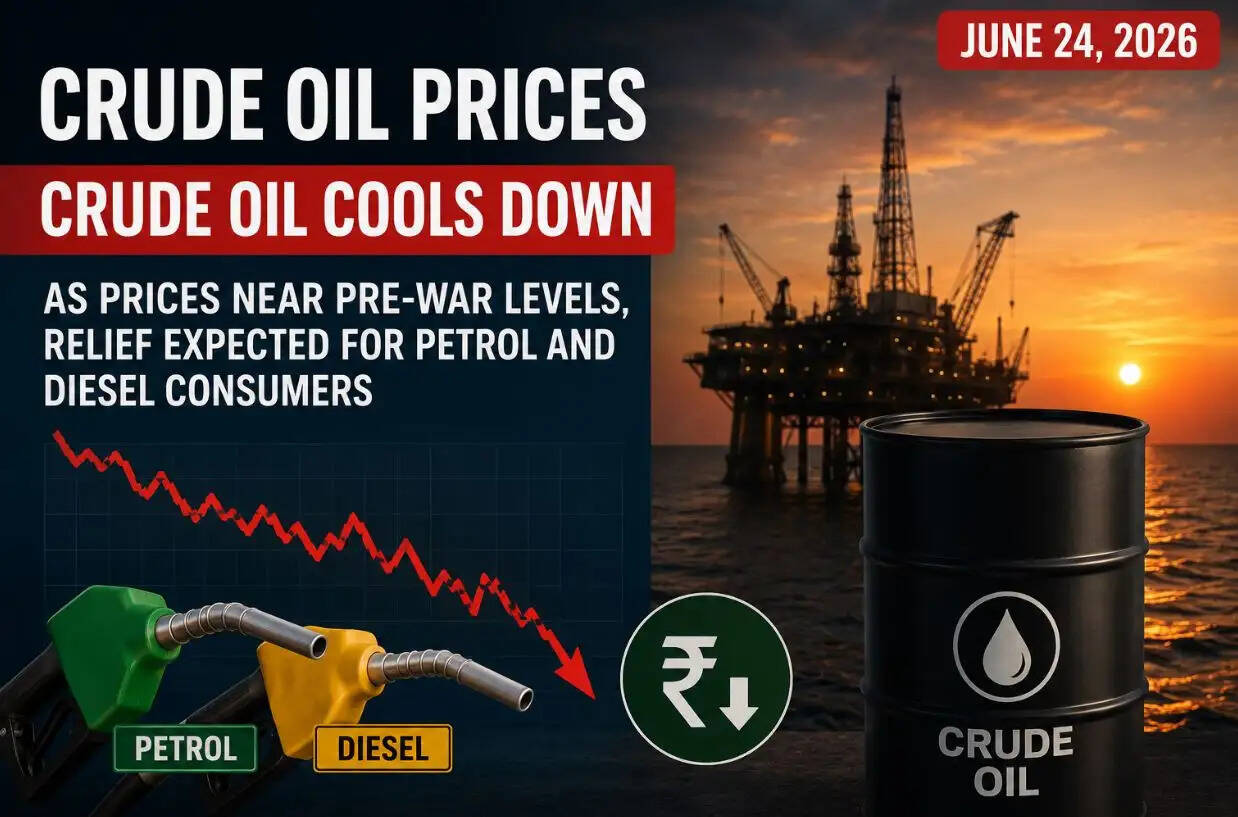
Crude Oil Prices June 24, 2026: Crude Oil Cools Down as Prices Near Pre-War Levels, Relief Expected for Petrol and Diesel Consumers
Crude Oil Price Today: Global crude oil prices continued to decline on June 24, bringing fresh hope for lower fuel costs. After weeks of volatility triggered by tensions in the Middle East, oil prices have now dropped close to the levels seen before the US-Iran conflict escalated.
RJ Kesari News Desk: The latest fall comes after the reopening of the Strait of Hormuz and a temporary US decision allowing Iran to export oil for the next 60 days. These developments have eased supply concerns and increased expectations that petrol and diesel prices in India could come under pressure in the coming weeks.
Brent Crude Falls Below $77 Per Barrel
International crude oil benchmarks remained under pressure during Wednesday's trading session.
As of early morning trade:
- Brent Crude declined 0.34% to $76.82 per barrel
- WTI Crude Oil slipped to around $72.92 per barrel
The correction has been significant. Brent crude has fallen nearly 20% over the past month, reversing much of the sharp rally witnessed during the peak of geopolitical tensions.
At one point during the conflict between the United States and Iran, crude oil prices had surged beyond $120 per barrel, raising fears of higher fuel costs worldwide.
Why Are Crude Oil Prices Falling?
The biggest reason behind the recent decline is the normalization of oil supplies through the Strait of Hormuz, one of the world's most important energy shipping routes.
Following diplomatic progress between the United States and Iran, oil tanker movement through the region has increased substantially, reducing concerns about supply disruptions.
Adding to market optimism, the US government has granted Iran a temporary 60-day waiver allowing the sale of crude oil and petroleum products. This decision is expected to boost global oil availability and improve supply conditions.
Iran's Return Could Increase Global Oil Supply
The temporary easing of restrictions on Iranian oil exports has changed market sentiment significantly.
The decision allows refiners and energy buyers around the world, including those in India and the United States, to legally purchase Iranian crude oil and refined petroleum products during the waiver period.
Analysts believe that increased Iranian exports could help balance global supply and reduce upward pressure on oil prices.
For countries like India, which import the majority of their crude oil requirements, additional supply sources could help lower procurement costs and strengthen energy security.
UAE Oil Exports Recover Strongly
According to the latest report from the International Energy Agency (IEA), crude oil exports from the United Arab Emirates (UAE) have recovered significantly during June.
The report indicates that UAE exports have returned to nearly 85% of their normal levels.
The recovery has been supported by:
- Expanded pipeline networks
- Large storage facilities
- Alternative shipping routes
- Improved logistics infrastructure
This improvement in supply has further contributed to the decline in global oil prices.
Will Petrol and Diesel Prices Become Cheaper in India?
The sharp correction in crude oil prices has raised expectations of relief for Indian consumers.
Since India imports nearly 85% of its crude oil requirement, lower international oil prices generally improve the economics of fuel production.
However, experts caution that any reduction in petrol and diesel prices may not happen immediately.
Oil purchased at lower rates must first be transported to India, processed at refineries, and distributed through the supply chain before consumers can benefit from cheaper crude.
If crude oil continues trading at lower levels over the coming weeks, the possibility of future fuel price reductions could increase.
New Concerns Emerge Despite Falling Oil Prices
While the current trend is positive for energy markets, some uncertainties remain.
Reports suggest that Iran and Oman have begun discussions on a joint framework for managing shipping traffic through the Strait of Hormuz.
The proposal reportedly includes the possibility of charging toll fees on vessels passing through the strategic waterway.
If implemented, additional transportation costs could influence future oil prices and affect shipping expenses for global energy companies.
Also Read: LPG Cylinder New Rules Explained: What Are the 30-Day and 90-Day Rules, and Who Will Be Affected?